
Let me tell you what happened, because the details matter.
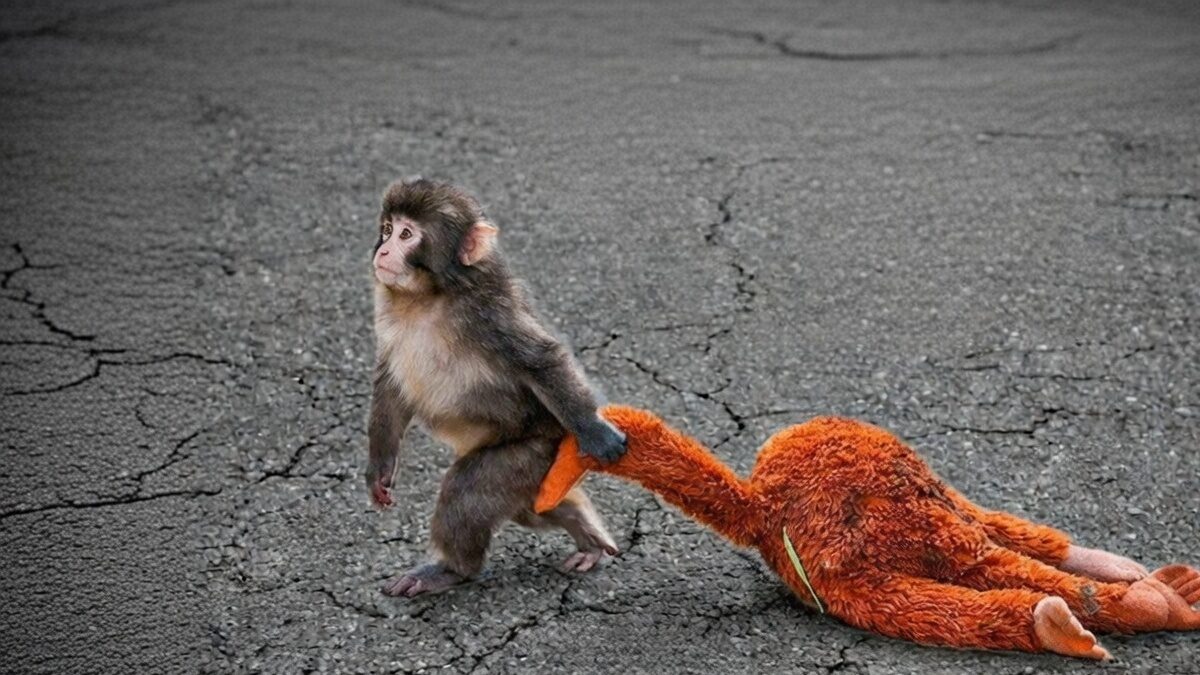
A baby macaque named Punch — seven months old, abandoned by his mother at a small zoo outside Tokyo — was given an IKEA stuffed orangutan to help him cope. Zookeepers figured the toy would provide comfort during reintegration with the troop. They were right. What they didn’t anticipate was footage of Punch being swatted by adult monkeys, running back to his plush toy, dragging it in desperate circles across the dirt — hitting 30 million views. That Stephen Colbert would mention him. That the entire internet would, in a collective and slightly unhinged way, decide this monkey was their emotional support animal.
And somewhere in this, someone at IKEA noticed the toy in his arms was theirs.
Who Is Punch, Actually
Born July 2025 at Ichikawa City Zoo east of Tokyo. Rejected at birth. Hand-raised by keepers who tried reintegrating him with the troop in January 2026. The Djungelskog plush came along for practical reasons — dragging a heavy toy builds upper-body strength in young macaques. That’s the whole origin story.
The video shows Punch getting scolded and pushed away by older monkeys. Every time, he scrambles back to his stuffed toy. There’s something people couldn’t shake — maybe the slapstick, maybe the loneliness, probably both — and clips spread from Japanese zoo channels to TikTok to the evening news within days.
Fan art. Merch. A whole subreddit. The full internet treatment.
What IKEA Actually Did
Here’s the thing — they didn’t do much. And that was the whole point.
No agency got a call. No brief was written. IKEA posted a single photo of the Djungelskog with one line: “Sometimes, family is who we find along the way.” That’s it. One sentence. No hashtags, no tagging the zoo, no “as seen on TikTok” energy. Just a quiet, well-timed observation.
Then — and this is where a lot of brands fumble — they didn’t stop. They ran a print ad under the line “Punch’s comfort orangutan.” IKEA Japan donated toys and storage furniture to the zoo. The Malaysia team announced that a portion of Djungelskog sales would go toward orangutan conservation. Each follow-up move made sense on its own terms. Nothing felt like a brand trying to squeeze mileage out of a monkey.
According to CNN, the Djungelskog sold out across Japan, the US, and South Korea. On eBay, the same $19.99 toy was listing for $350. People were paying it.
Why Most Brands Would Have Blown This
Think about what could have gone wrong. A campaign manager spots the trend and greenlights a 60-second brand film. Legal flags the zoo content. Someone suggests a paid collab with the zookeepers. Three weeks later, a polished, safe video goes live and gets 11,000 views.
That’s how most brands handle moments like this. By the time approvals clear, the moment has moved on.
What IKEA understood — maybe instinctively, maybe because they’ve been around long enough — is that their only job was to acknowledge the story, not become it. The comparison everyone makes is Oreo’s 2013 Super Bowl blackout tweet: “You can still dunk in the dark.” One line, no budget, Cannes Lions. As ALM Corp’s post-mortem on the campaign notes, brands that win these moments aren’t the fastest to react — they’re the ones already woven into the story before it happened.
Oreo was a Super Bowl sponsor. IKEA’s toy was in the monkey’s arms. You can’t manufacture that.
Three Things Worth Taking Away
Real-time marketing gets talked about like a trainable skill. Sometimes it is. But the Punch moment teaches something a little different:
Relevance isn’t created in the moment — it’s already been earned. IKEA didn’t become emotionally resonant the day Punch went viral. That caption landed because years of warmth were behind it. One line from a cold brand doesn’t land the same.
Speed matters less than restraint. The first post was one sentence. Knowing what not to say is its own skill.
Follow-through is where brands win or lose. Retail Insight Network tracked “Djungelskog” becoming one of the most searched product names of February 2026 — an unpronounceable Swedish word nobody had Googled a month earlier. The conservation tie-in, the zoo donation, the sustained presence — that’s what kept search interest alive well past the spike.
Punch is doing better these days, spending more time with the troop and less time dragging his plush around. IKEA didn’t spend a dollar on media and sold out globally. Both doing just fine.
If you noticed an error or have a tip, please contact us via our Contact page.